‘WHOSE LAND? WHOSE GOD?’
ODETTA GALLERY
On view: July 7 - August 20, 2017
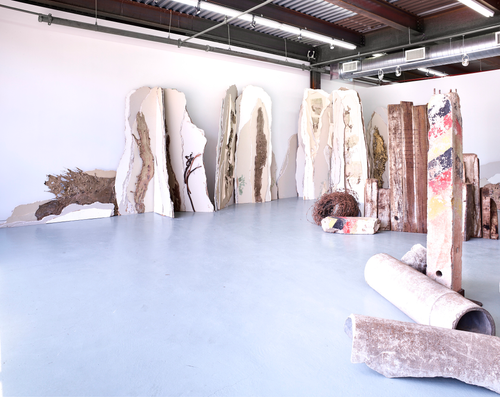
Layers of dry-wall panels with broken edges are assembled to stand like an open book, stretching through the gallery space, a metaphor of an “old story.” The broken walls stretch up to 9ft in height, and construct a context for golden bronze shapes that appear like unexplainable treasures next to the images of ancient texts of the Abrahamic religions from 10 Centuries of peaceful co-existence and a prayer written in Hebrew in 1945 and carved in a free-standing wood wall. Historic authentic border posts and barbed wire from the former East German border stand nearby among broken curved cement forms that capped the walls preventing escapees from scaling the cement walls.
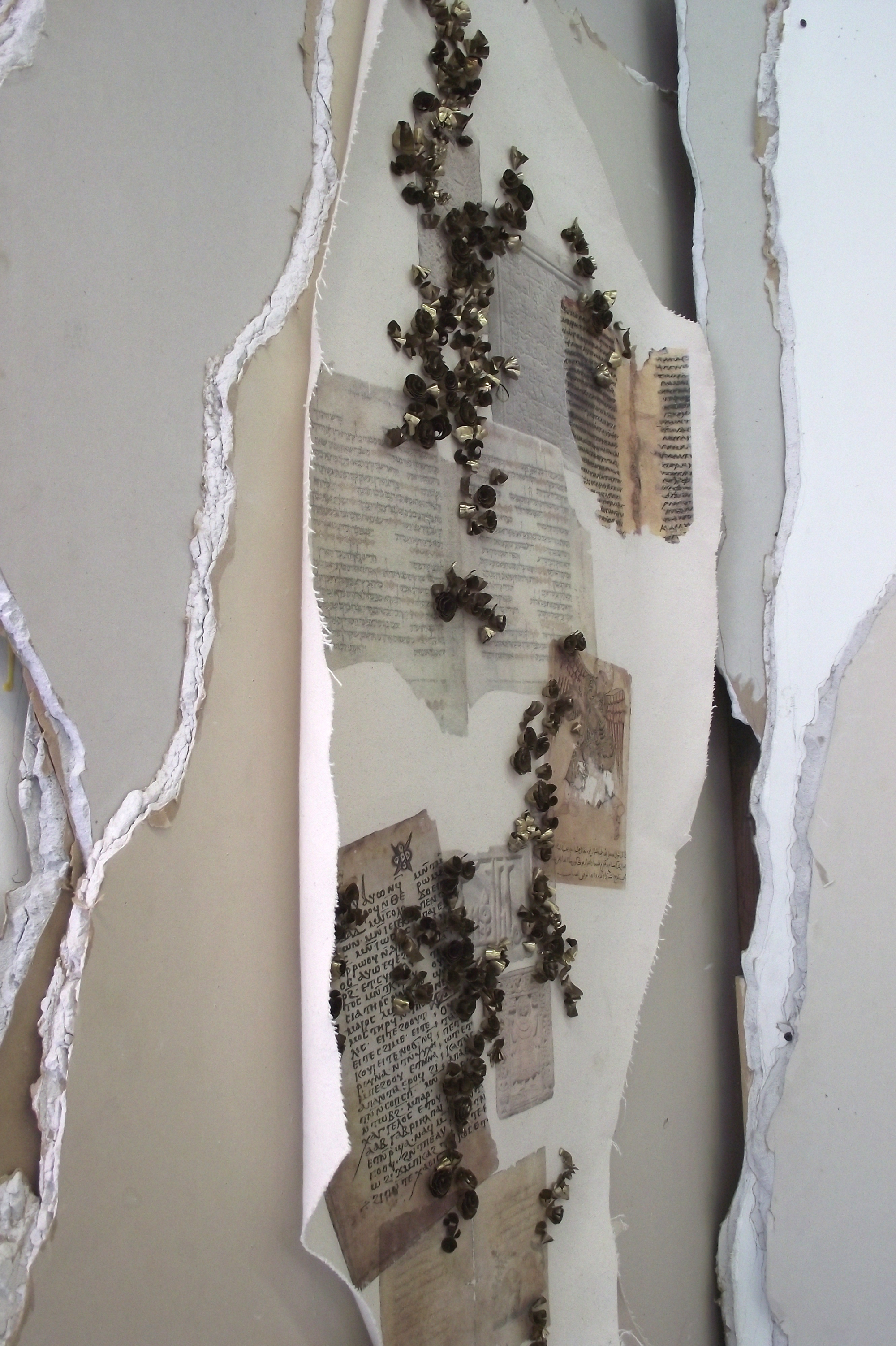
The “old story” is collaged with golden bronze fragments on the book-like dry-wall wall structure In another area with photo-transferred images of ancient Arabic, Hebrew, Coptic and Greek texts. The historic texts from the years 2 to 11 are framed by dramatic golden, 6ft high textured bronze forms.
A phrase from a spiritual in my memory “…and the walls came a tumbling down” refers to the book of Joshua in the Tanakh or in Christian liturgy, the Biblical Old Testament about Joshua and the battle of Jericho. These images from 10 Centuries of peaceful co-existence juxtaposed with the hopeful structures of collapsing barriers evoke hopeful possibilities in this era of devastating conflicts between the followers of Abrahamic religions.
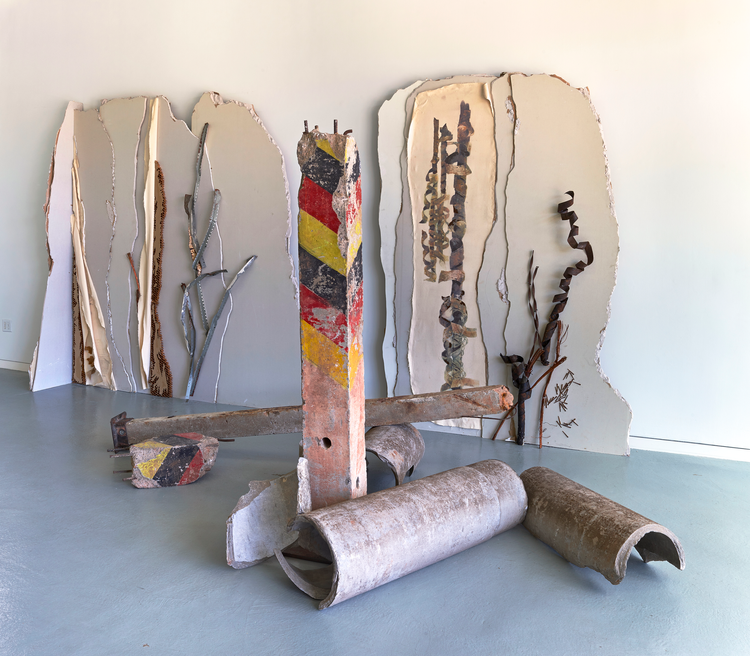
Site-specific installation detail: collaged dry-wall panels with collaged elements, canvas with torn edges, photo transfers, acrylic, text, 9.5ft high at highest point; underground electric cable, and 1 tall and 2 smaller broken border posts and barbed wire from the former East German Border; 5 curved broken sections from the top of the former Berlin wall, broken parts that prevented potential escapes from hooking a line on the top and scaling the wall.
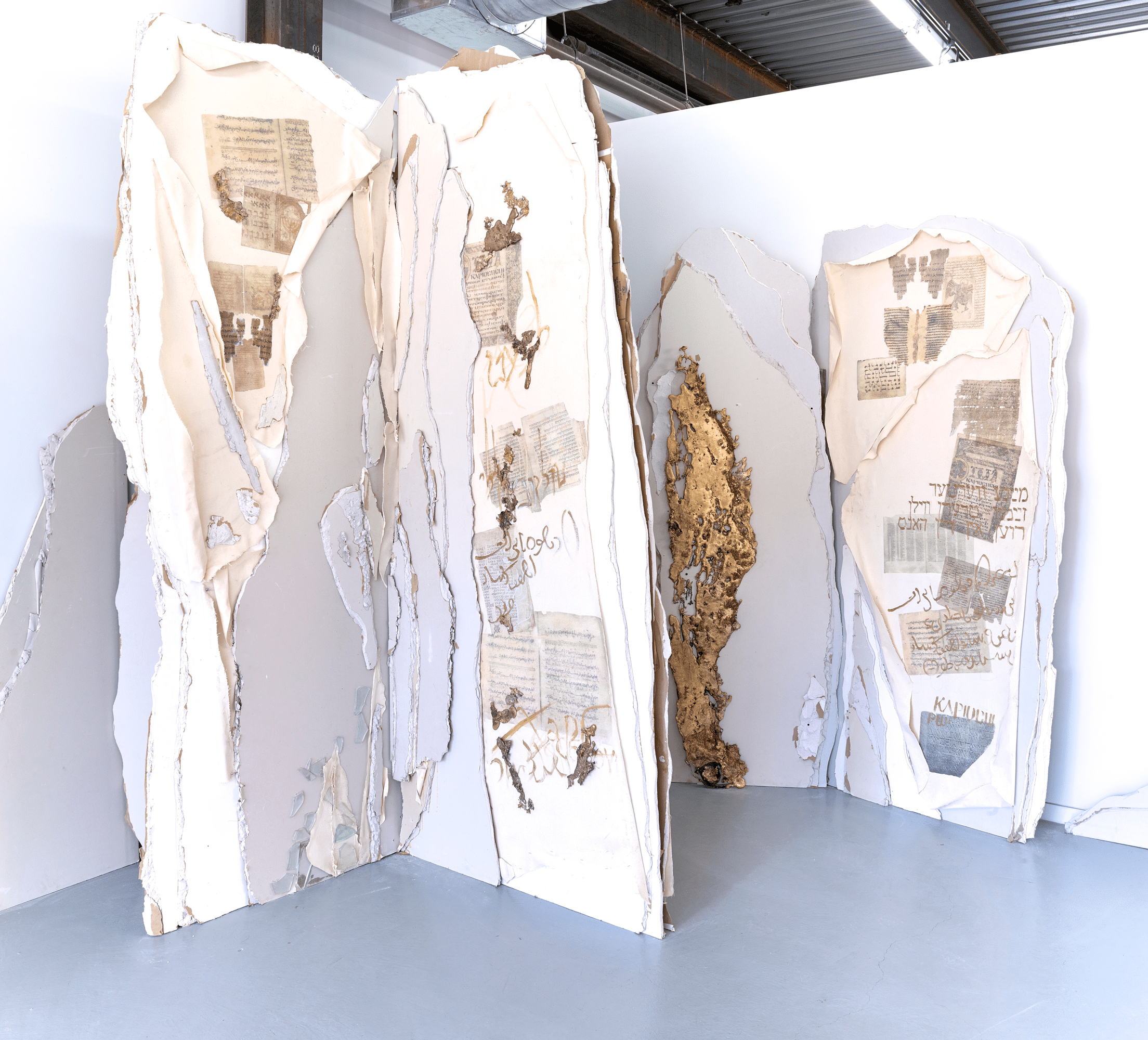
Site-specific installation detail: collaged dry-wall panels with collaged elements, canvas with torn edges, photo transfers, acrylic, text, 9.5ft high at highest point; bronze elements.
Layers of dry-wall panels with broken edges are assembled to stand like an open book, a metaphor of an “old story.” They construct a context for golden bronze shapes that appear like unexplainable treasures next to the images of ancient texts of the Abrahamic religions from 10 Centuries of peaceful co-existence.
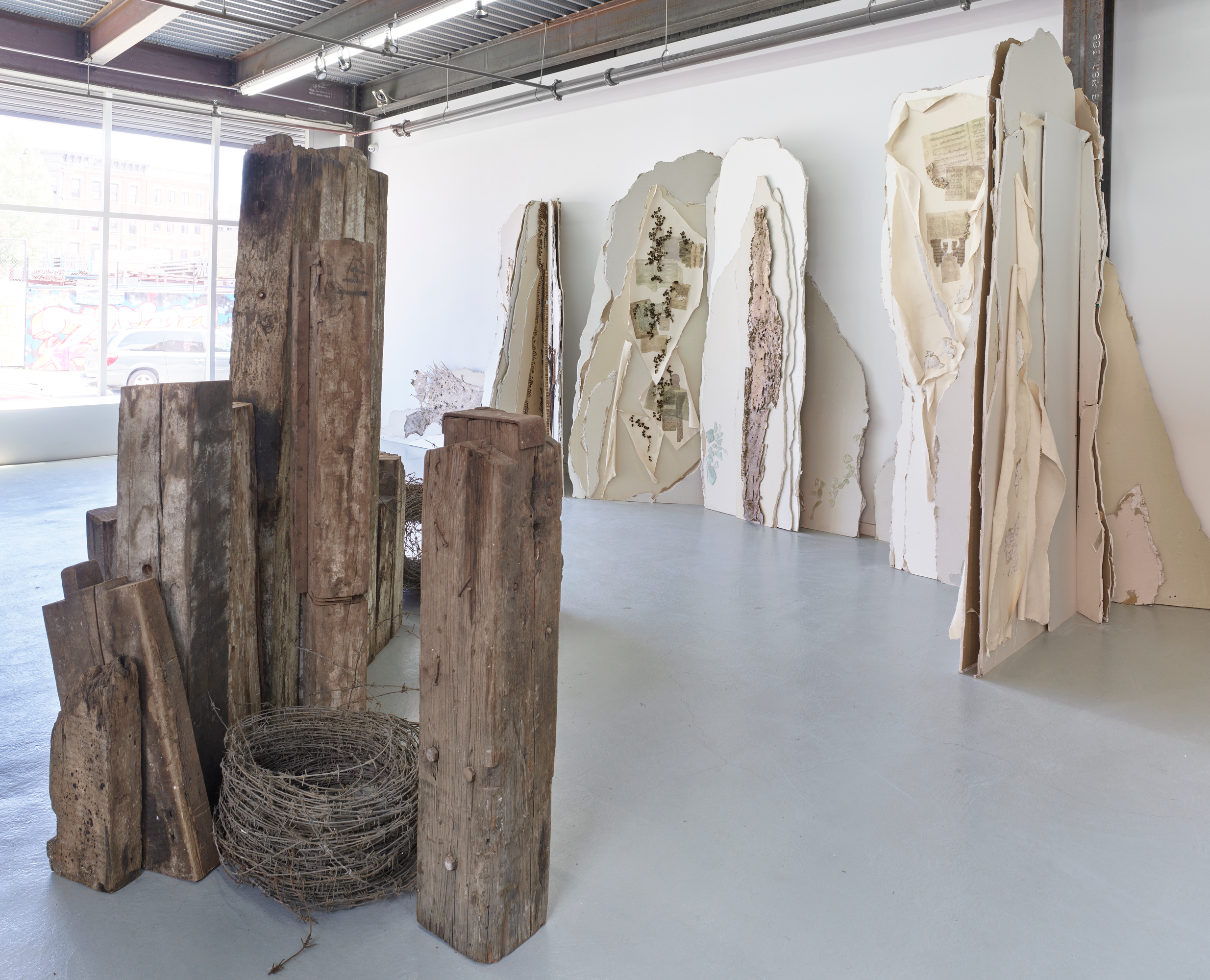
Site-specific installation detail: wall with Yiddish text from back: the foreground shows the free-standing wood wall of 180-year-old beams rescued from a Manhattan demolition site.
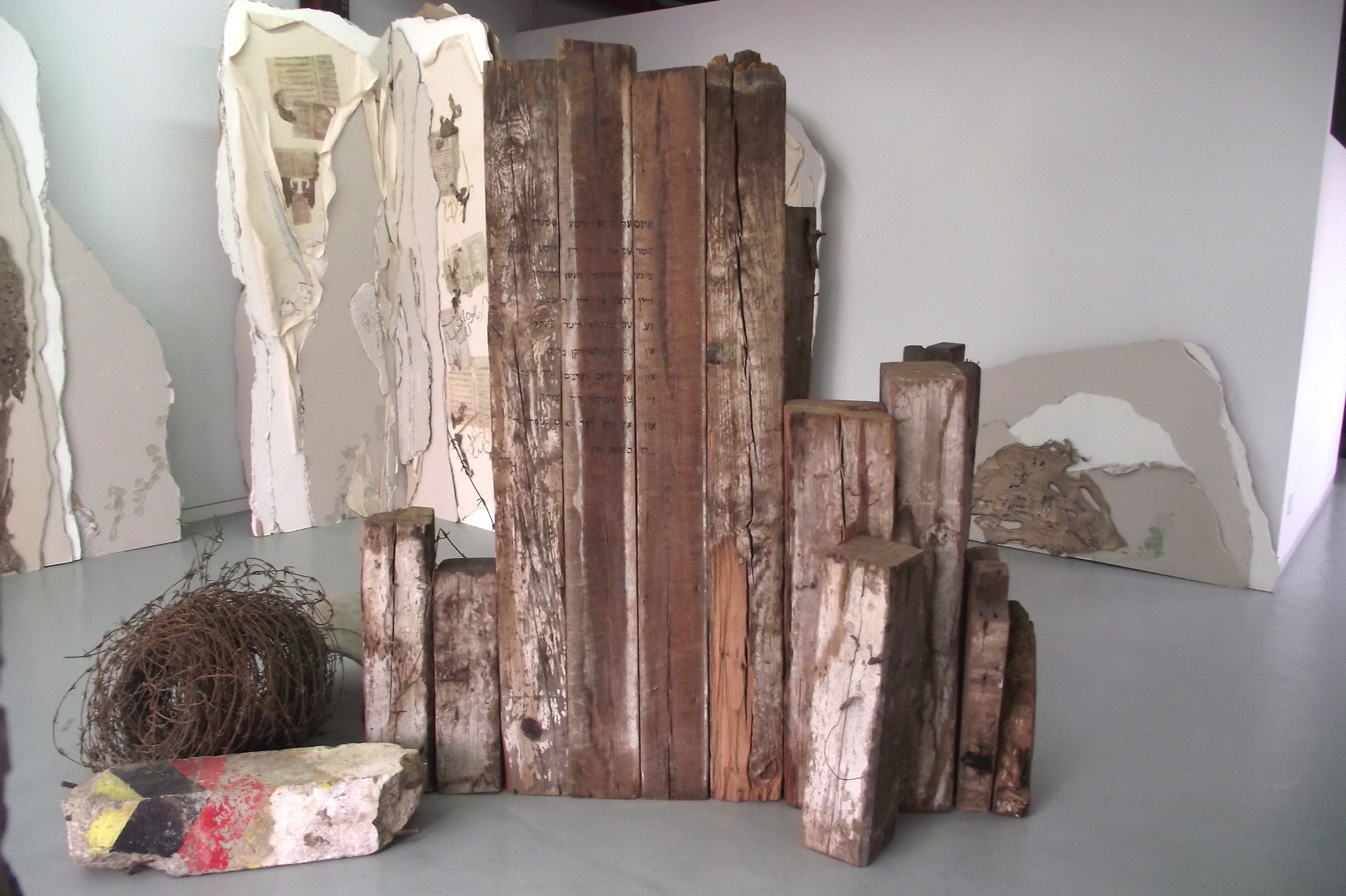
Site-specific installation detail: Yiddish prayer written by Afraham Sutzkever presumed to have been written in Vilna Ghetto in 1943 in Hebrew script with English translation carved in a free-standing wood wall of 180-year-old beams rescued from a Manhattan demolition site.
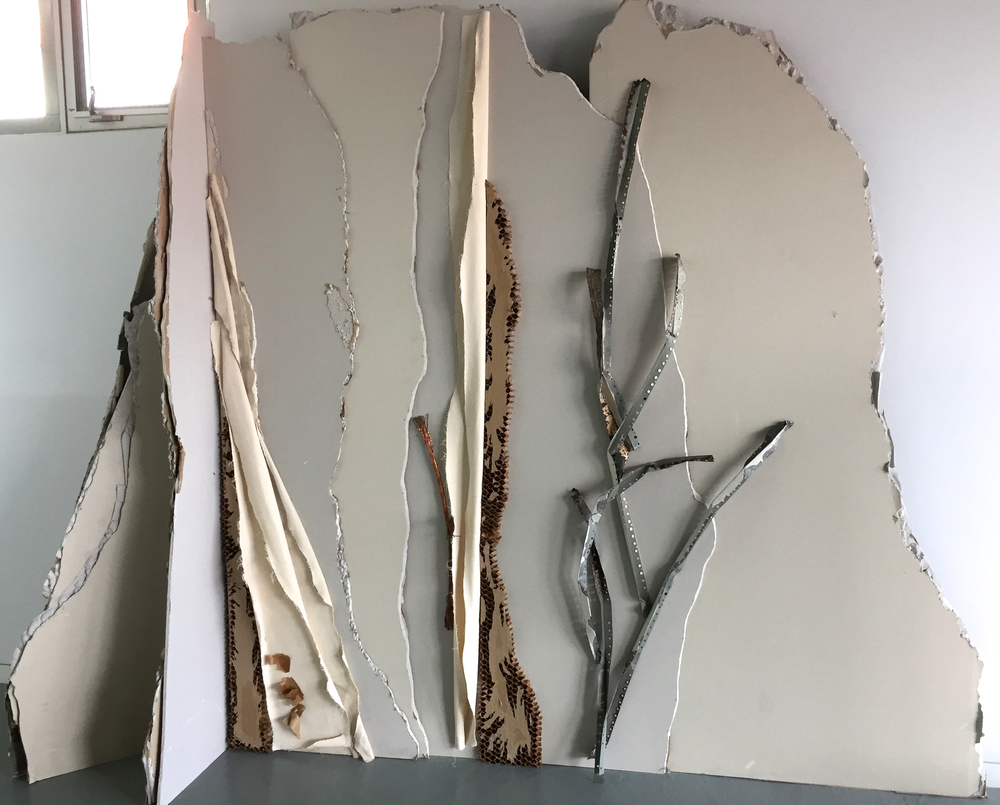
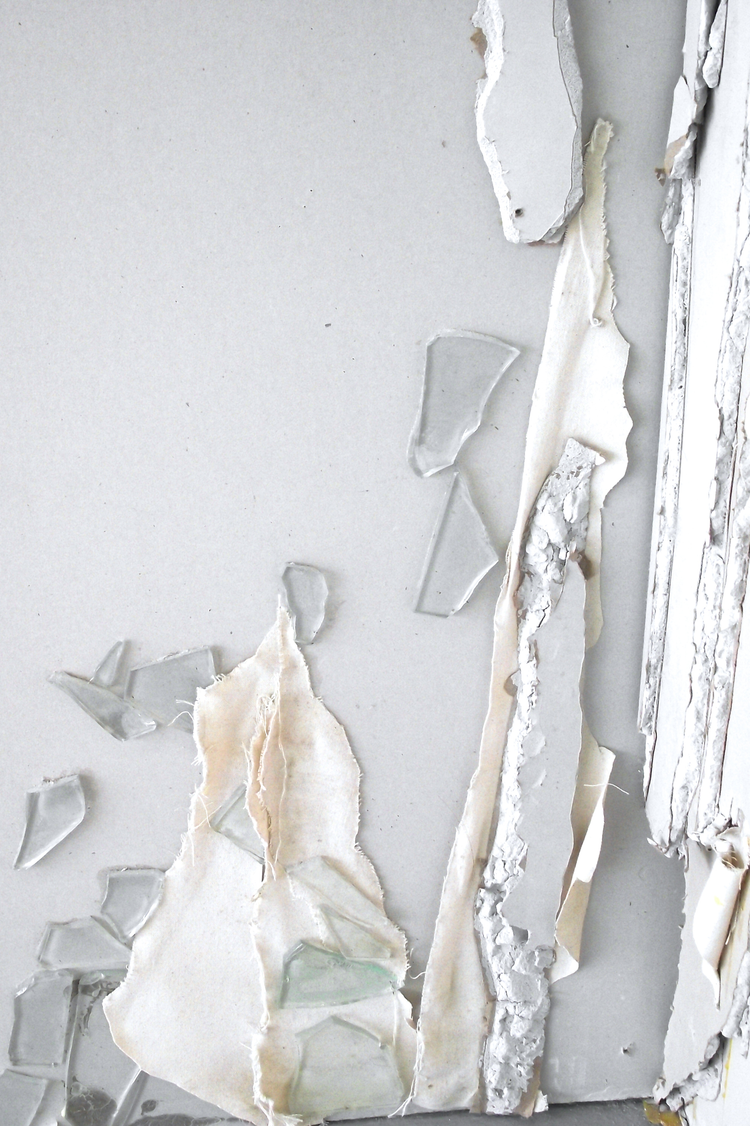
Site-specific installation detail: dry-wall panels with collaged elements.
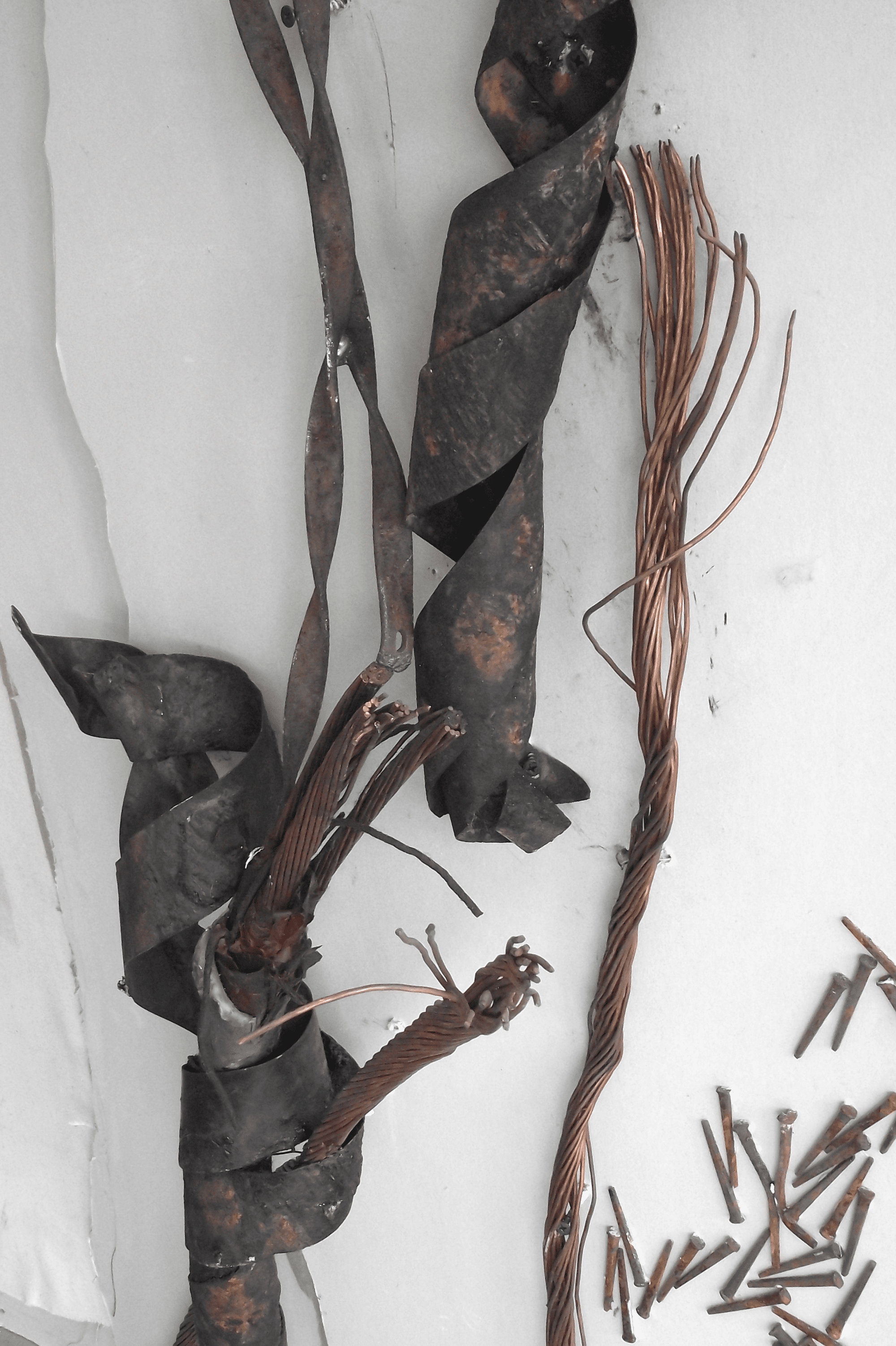
Site-specific installation detail: underground electric cable from the former East German border that ran the machine guns and Mercury lights lining the wall, on drywall.
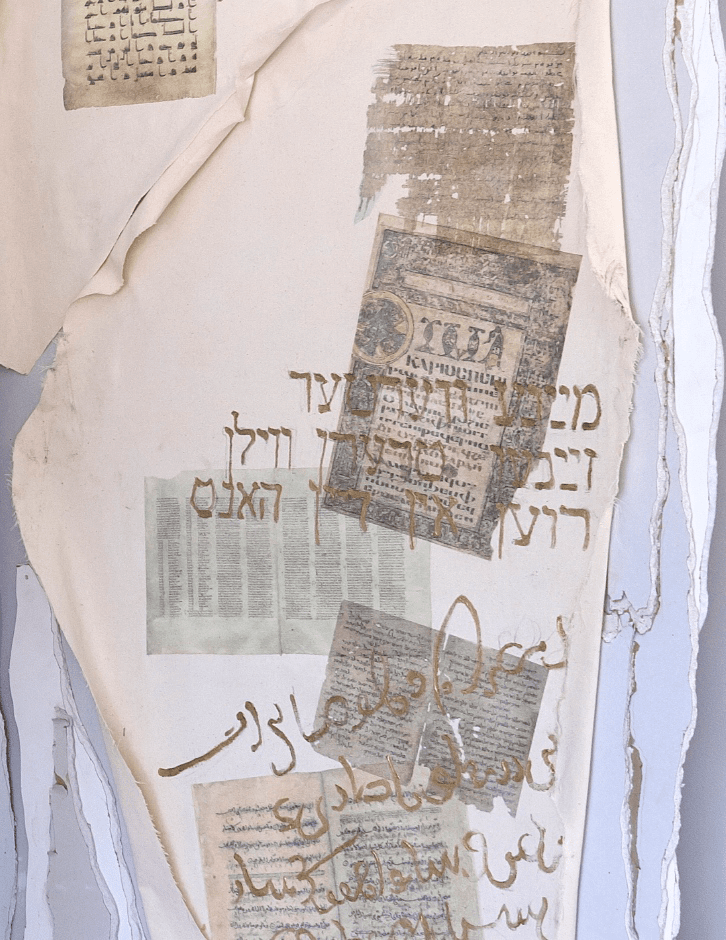
Site-specific installation detail: collaged dry-wall panels with collaged elements, canvas with torn edges, acrylic, text, 9 1/2 ft high at highest point; images of ancient texts of the Abrahamic religions from 10 Centuries of peaceful co-existence; one text in ancient Coptic dialect; book of Exodus written in an arabic dialect; a page of the Koran written in Hebrew script.
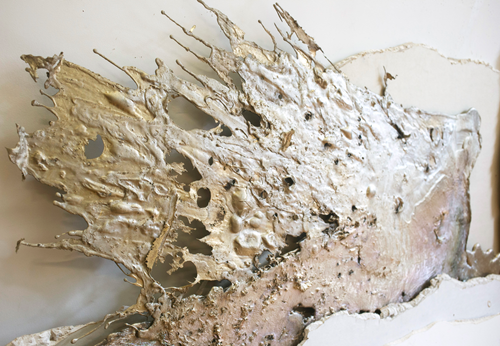
Site-specific installation detail: bronze cast from military scrap, on drywall.
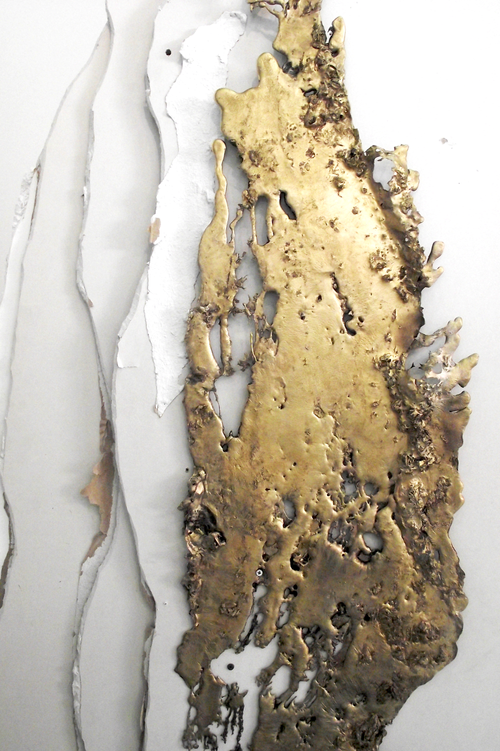
Site-specific installation detail of detail: bronze cast from military scrap.